
When Your Nervous System No Longer Trusts Good Things
How I learned to stop bracing against the life I once prayed for

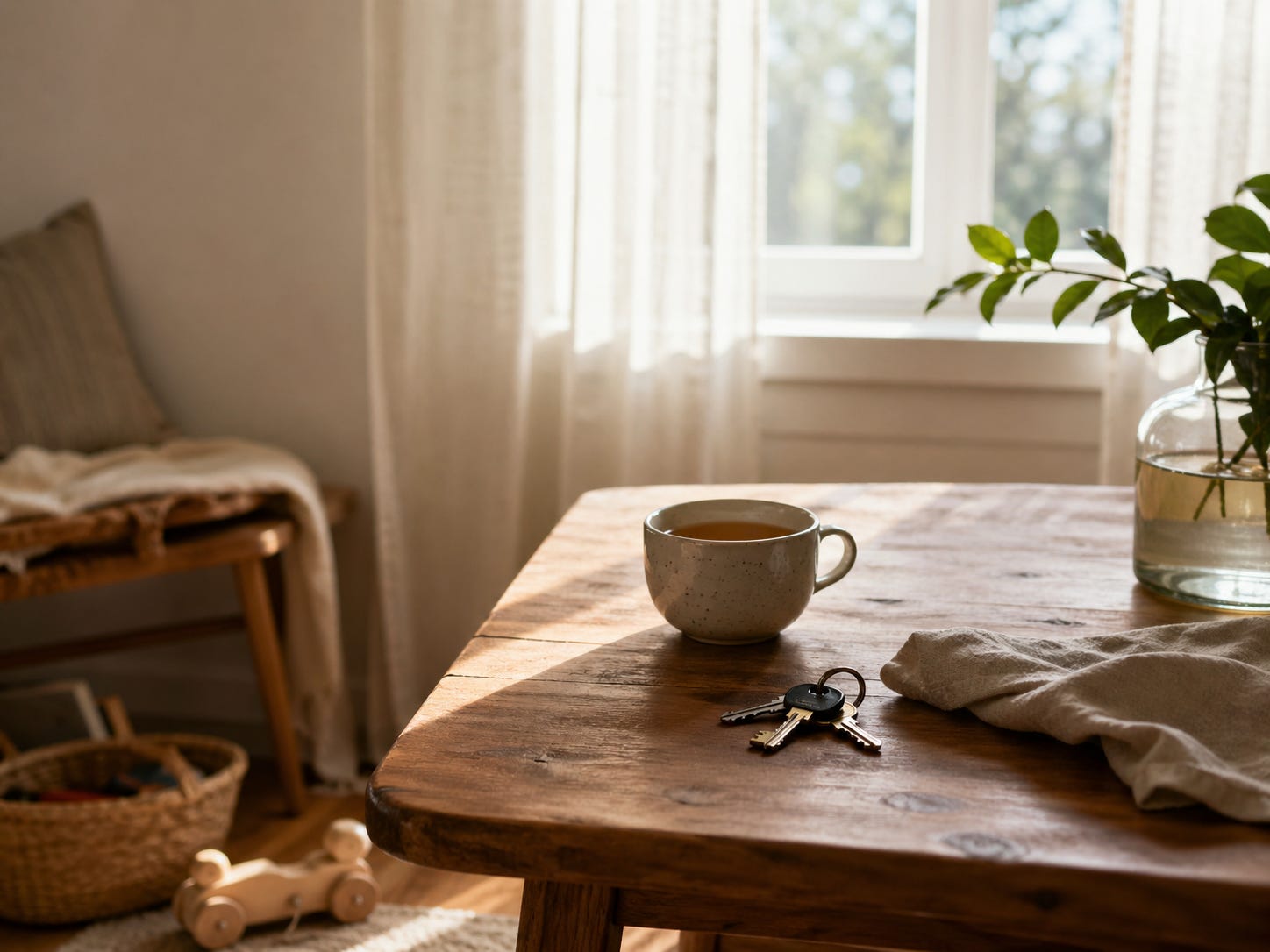
Six years ago, I wanted stability more than anything.
I wanted a life that didn’t feel like it could collapse at any moment.
I wanted peace.
I wanted love.
I wanted a home.
I wanted a future I could trust.
And then, slowly, life began giving me pieces of that future.
A wife.
A baby boy.
A home.
A life that looked nothing like the one I had lost.
But something strange happened.
When good things finally arrived, I didn’t know how to relax inside them.
I didn’t feel only grateful.
I felt alert.
As if my body was quietly asking:
How long will this last?
When will it disappear?
What will go wrong next?
That is the part of rebuilding people rarely talk about.
Sometimes, after collapse, the hardest part is not surviving the bad thing.
The hardest part is trusting the good thing when it finally comes.
Because losing everything once changes how your body listens to life.
Even when your mind says, you are safe now, something deeper still whispers:
Are we sure?
The hard part was not only rebuilding my life.
The hard part was learning how to stop bracing once something good finally arrived.
For a long time, I thought the rebuild would be complete when my external life looked stable again.
A better job.
A calmer rhythm.
A family.
A home.
I thought peace would arrive naturally once the circumstances changed.
But that is not exactly how it works.
Sometimes your life improves before your body believes it.
Sometimes the house is real, the love is real, the baby is real, the second chance is real, and still, some part of you stands near the door, waiting for the next loss.
That is what collapse does.
It does not only take things from you.
It trains you.
It trains your mind to scan.
It trains your body to brace.
It trains your heart to hold joy carefully, as if joy might punish you for trusting it too much.
I did not understand this at first.
I thought something was wrong with me.
How could I finally have the things I once prayed for and still feel anxious?
How could I sit in a quiet room with my son and still feel the old fear moving somewhere underneath?
How could I sign papers for a house and feel both gratitude and disbelief?
The answer is simple, but it took me years to accept.
My life had changed.
My nervous system had not caught up yet.
Good things can feel unsafe after loss
There is a strange kind of fear that appears when good things start happening after years of instability.
It is not loud.
It does not always look like panic.
Sometimes it looks like caution.
Sometimes it looks like emotional distance.
Sometimes it looks like waiting before celebrating.
Sometimes it looks like saying, “Let’s see,” when what you really mean is, “I am afraid to believe this.”
You receive good news, but instead of expanding, you tighten.
You hear kind words, but part of you questions them.
You feel love, but you scan for signs that it might leave.
You enter a better season, but you cannot fully inhabit it.
That was one of the most confusing parts of my rebuild.
I wanted good things.
Then when they arrived, I did not know how to receive them without suspicion.
It is painful to admit that.
Because people expect recovery to look like joy.
They expect the person who survived collapse to finally smile, relax, and say, “Everything makes sense now.”
But rebuilding is more complicated than that.
Sometimes you survive the fall, climb out of the rubble, reach a better place, and still carry the reflexes of someone who expects the ground to disappear.
That does not mean you are ungrateful.
It means your body remembers.
The body remembers what the mind wants to move past
The mind loves timelines.
Before.
After.
Then.
Now.
The mind says:
That happened years ago.
You are not there anymore.
Things are better now.
And all of that may be true.
But the body does not heal only because the calendar moved.
The body remembers instability in a different language.
It remembers the shock.
The uncertainty.
The humiliation.
The fear.
The nights where you did not know how things would work out.
The body remembers what it cost to survive.
So when life becomes good again, the body does not always celebrate immediately.
Sometimes it asks for evidence.
Not once.
Repeatedly.
It wants to know:
Is this safe?
Will this last?
Can I rest here?
Can I trust this?
Can I stop preparing for disaster?
And if you have lived through enough loss, you may not know how to answer those questions right away.
I didn’t.
When something good happened, my first instinct was often to protect myself from disappointment.
I would minimize it.
I would tell myself not to get too excited.
I would imagine what could go wrong.
I thought I was being wise.
But sometimes what we call wisdom is just fear wearing a mature voice.
The hidden cost of bracing
Bracing feels protective.
It gives you the illusion that if you expect pain, pain will hurt less.
But it does not work that way.
Pain still hurts.
The only difference is that bracing steals peace before anything bad even happens.
You lose twice.
You suffer the imagined loss before the real one arrives, and sometimes the real one never comes.
That is the hidden cost.
You don’t fully enjoy the good morning because you are waiting for the difficult afternoon.
You don’t fully receive love because you are preparing for abandonment.
You don’t fully celebrate progress because you are afraid it will reverse.
You don’t fully rest in your home because some part of you still remembers not having one.
That is not protection.
That is delayed survival.
I had to learn that my constant readiness for pain was not keeping me safe.
It was keeping me distant from my own life.
The life I had worked so hard to rebuild was in front of me.
But part of me was still living in the emergency.
The life I once prayed for
This is the part that humbles me.
There were years when the things I have now felt impossible.
A wife.
A home.
A baby boy.
Peaceful mornings.
Keys in my hand.
Small routines.
A child reaching for me.
A family waiting inside.
These were not small things.
They were once the impossible things.
And yet, when they became real, I sometimes moved through them as if I were afraid to touch them too directly.
Because the mind can desire a blessing long before the body knows how to receive it.
I think many people live this way.
They pray for peace, then feel restless when life gets quiet.
They ask for love, then panic when someone gets close.
They want stability, then feel trapped when life becomes steady.
They want success, then feel unsafe when visibility arrives.
Not because they are broken.
Because peace is unfamiliar.
And what is unfamiliar can feel unsafe, even when it is good.
That is a strange truth.
Sometimes chaos feels more familiar than calm.
Not better.
Just familiar.
And the nervous system often chooses what is familiar before it chooses what is healthy.
That is why rebuilding is not only about changing your circumstances.
It is about changing what your body recognizes as home.
The mistake I made
For a while, I tried to talk myself out of the fear.
I would say:
Everything is fine.
You should be grateful.
Stop overthinking.
You have what you wanted.
But shame does not create safety.
Pressure does not create trust.
You cannot bully your nervous system into peace.
The more I judged myself for bracing, the more tense I became.
So I had to change the question.
Instead of asking, “Why can’t I just enjoy this?”
I started asking:
“What part of me still believes this could disappear?”
That question softened something.
Because underneath the anxiety, there was not ingratitude.
There was fear.
A younger version of me still trying to prevent another collapse.
A part of me that remembered what it felt like to lose direction.
A part of me that had learned:
Don’t relax too much.
Don’t trust too quickly.
Don’t celebrate too loudly.
Don’t assume anything is permanent.
That part was not trying to ruin my life.
It was trying to protect me.
But protection can become a prison if you never update it.
How I began to trust good things again
Trust did not return through one big realization.
It returned through practice.
Small, quiet practice.
Not dramatic.
Not perfect.
Just repeated.
I began with something simple.
When something good happened, I stopped rushing past it.
I named it.
Not loudly.
Just honestly.
This is good.
That alone was harder than it sounds.
Because naming something good requires vulnerability.
It means admitting that it matters.
And admitting that something matters means accepting that losing it would hurt.
That is why so many people keep joy at a distance.
They are not cold.
They are scared.
I was scared too.
But I started practicing.
When my son laughed, I tried not to immediately reach for my phone, my worry, my next task.
I told myself:
This is good. Stay here.
When I walked through the house, I tried to notice the walls, the floor, the light, the ordinary safety of being inside a place that was ours.
This is good. Receive it.
When my wife and I moved through a simple day, nothing extraordinary, nothing dramatic, I tried to let the simplicity matter.
This is good. Don’t shrink from it.
That became the practice.
Not forcing happiness.
Not pretending fear was gone.
Just staying with the good thing for a little longer than my fear wanted me to.
The five-step practice that helped me
This is the practical part.
If good things make you anxious after loss, don’t shame yourself.
Try this instead.
1. Name the good thing clearly
Do not minimize it.
Do not rush to the next worry.
Say it plainly.
This is good.
This relationship is good.
This home is good.
This progress is good.
This quiet is good.
This opportunity is good.
Naming the good thing teaches your mind to stop treating blessings as background noise.
2. Notice where your body braces
Don’t analyze immediately.
Just notice.
Is your chest tight?
Is your jaw tense?
Are your shoulders lifted?
Is your stomach unsettled?
Are you already imagining what could go wrong?
The body tells the truth before the mind explains it.
Notice the bracing without attacking it.
3. Tell yourself the new sentence
This is the sentence I return to:
This is good, and I am allowed to receive it.
Not own it forever.
Not control it.
Not guarantee it.
Receive it.
There is a difference.
Receiving does not mean pretending nothing can change.
It means refusing to abandon the present moment just because the future is uncertain.
4. Stay one minute longer
This matters.
When joy feels unsafe, your instinct may be to escape it.
To distract.
To joke.
To plan.
To scan.
To look for the flaw.
Instead, stay one minute longer.
One more minute in the hug.
One more minute in the quiet.
One more minute enjoying the good news.
One more minute letting your child’s laughter enter your body.
You are teaching your nervous system:
We can survive peace.
5. Repeat until peace feels less foreign
This does not work once.
It works through repetition.
Your body learned fear through repetition.
It learns safety the same way.
Again and again.
A calm morning.
A safe conversation.
A promise kept.
A meal shared.
A room that remains peaceful.
Each repetition becomes evidence.
And slowly, the body starts believing what the mind already knows.
The deeper rebuild
I used to think the rebuild was about achievement.
Recover the career.
Fix the finances.
Create stability.
Build the family.
Buy the house.
And yes, those things matter.
But they are not the whole rebuild.
The deeper rebuild is quieter.
It is learning to sit inside a peaceful moment without looking for the exit.
It is learning to be loved without preparing your defense.
It is learning to receive stability without calling it temporary before it has even had a chance to stay.
It is learning that the life you prayed for does not need to be distrusted just because the life before it collapsed.
That sentence took me years to live.
The life you prayed for does not need to be distrusted just because the life before it collapsed.
I still return to it.
Because sometimes I forget.
Sometimes fear speaks first.
Sometimes the old reflex wakes up.
But now I recognize it faster.
I can say:
This is the old bracing.
This is the old scan.
This is the part of me that thinks fear will protect me.
And then I come back.
To the room.
To my wife.
To my son.
To the house.
To the ordinary life in front of me.
The life I once thought I would never have.
What I know now
A good life is not only built.
It has to be received.
That is the part I underestimated.
You can work for peace and still not know how to rest in it.
You can earn stability and still feel unsafe.
You can be loved and still expect abandonment.
You can hold your child and still feel afraid of losing everything.
That does not make you ungrateful.
It makes you human.
But at some point, if life gives you something good, you have to practice letting it reach you.
Not because it will last forever.
Nothing does.
But because refusing to receive joy does not protect you from loss.
It only protects you from living.
And I don’t want to survive my way through the life I once prayed for.
I want to live it.
Fully.
Imperfectly.
With open hands.
Closing
Sometimes the final stage of rebuilding is not getting the good thing.
It is learning not to run from it once it arrives.
It is standing inside your own life and whispering:
This is good.
I am allowed to be here.
I am allowed to receive this.
I do not have to brace every time life becomes beautiful.
That is the work I am learning now.
Not just how to rebuild after loss.
But how to trust peace after chaos.
How to let love stay close.
How to stop treating stability like a trap.
How to let my body believe what my life is already showing me.
That the collapse was real.
But so is this.
The fear was real.
But so is this.
The loss was real.
But so is this.
A wife.
A home.
A baby boy.
A quiet morning.
A key in the door.
A life that did not end when I thought it had.
This is good.
And I am learning, slowly, to receive it.
You don't have to do this alone.
https://calendly.com/therebuildproject
This really stayed with me.. especially the idea that life can change before the body believes it. I’ve noticed how easy it is to rush past the good moments, almost like they’re temporary by default. Learning to stay a little longer… that feels like the real work..